Phones answered 24/7Decatur, IL
Call (833) 490-5225
Phones answered 24/7Call any time(833) 490-5225
Urgent? Phones answered 24/7

Sangamon River and Stevens Creek flood damage in Decatur

Floodwater from the Sangamon and Stevens Creek is pumped out, the silt is cleared and the structure is dried before any rebuilding starts.

  • Answered 24/7
  • Frozen and burst pipes
  • Basement and sewer backups

Get a fast quote

Fastest: call (833) 490-5225. Or send this and we call you back.

River and Creek Flood

Sangamon River and Stevens Creek Flood Damage: what it covers

Quick answer

Decatur Water Damage Restoration answers river and creek flood calls in Decatur at any hour. Water from the Sangamon River, Stevens Creek or a local overflow is pumped out, silt is removed from floors and walls, and the structure is dried to moisture readings before anything is rebuilt. Crews start with the lowest rooms and return to check the framing.

Sangamon River and Stevens Creek Flood Damage illustration for Decatur, IL, with the Decatur water tower in the background

Stevens Creek runs south through Forsyth and into the Decatur area, then joins the Sangamon River near the western edge of town. Lake Decatur sits on the Sangamon, and the city has drawn its raw water from that lake since it was created between 1920 and 1922. The lake is a water-supply reservoir, not a flood-control structure, so a high river in Macon County can still reach low ground near the water.

The flood record here is long. A regional newspaper's photo history of the city documents street and basement flooding in 1938, when high water isolated a footbridge over Stevens Creek, and again in 1967, 1968, 1981, 1983 and 1986. Those years show that high water has returned to the same town more than once, and that a house near the water should expect the question to come up again.

River and creek water is not clean water. It carries silt, leaves, road debris and sometimes sewage, and it soaks into drywall, subfloors and insulation within hours. Decatur Water Damage Restoration treats the job as contaminated work from the first visit, which is why crews wear protective gear and bag whatever cannot be cleaned on site.

Service area
Decatur & Macon County
Availability
Phones answered 24/7, emergencies first
Warning signs

Signs you need sangamon river and stevens creek flood damage

Do not walk into moving water or a flooded basement, and stay out of any room where the power is still on. Keep generators outside and well away from windows and doors, and do not use a wet vacuum on a live circuit. River water can carry sewage, so wash hands well and keep food away from wet areas. Call Decatur Water Damage Restoration at (833) 490-5225 for pumping, and leave removal of contaminated material to trained crews.

  • A dark tide line on drywall or paint, often higher than anyone expected
  • Silt or fine sand in the carpet pad, along baseboards or in cracks in the slab
  • Flooring that cups or a subfloor that gives underfoot after the water has drained
  • A sour, earthy smell from a crawl space or lower room that fans do not clear
  • Cabinet toe kicks and door frames that have swollen or lifted
  • Mud or debris caught in floor vents, behind the water heater or along the garage floor
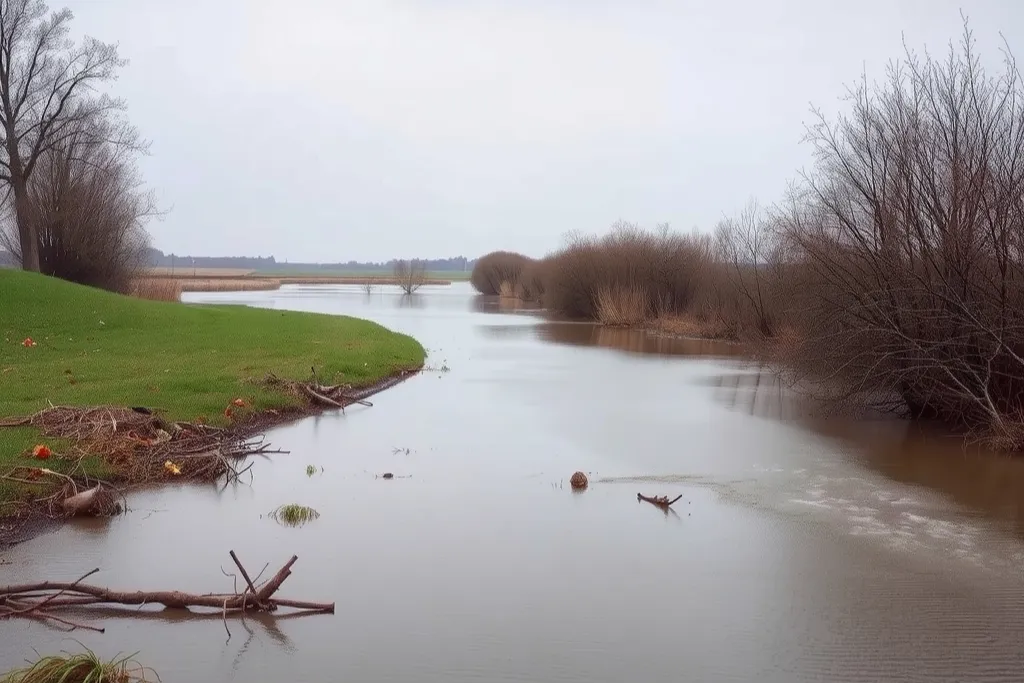
A slow brown creek running high past a grassy bank and cottonwood trees under a gray sky.
Creek water rises slowly and then all at once, and the first hour decides how much of the house it reaches.Illustration only: a scene of the kind described on the page, generated for this site. It is not a photograph of a job a crew has done, and it shows no particular Decatur house or resident.
Job stories

Typical jobs for sangamon river and stevens creek flood damage

Typical job
Illustration: Typical: creek water into an attached garage in Forsyth

Typical: creek water into an attached garage in Forsyth

What homeowners notice
Stevens Creek rose over its bank after a long rain and filled the low end of a yard. Brown water came under a garage door and left a line of silt across the concrete and the bottom of the stud wall.
What we do
The silt was removed by hand where it was thick, and standing water was pumped from the low corner. The bottom of the wall was opened to the height of the highest reading, and the insulation and the lower sheathing that had soaked were taken out. Drying equipment ran in the garage and the framing was checked at each visit.
What to expect
The homeowner received dated photographs of the waterline, the removal list with reasons and the readings. Items stored on the garage shelves were sorted into kept and discarded, and each discard was written down before it left the building.

a full day for removal and about a week of monitored drying typical visit

Options

Types and options for sangamon river and stevens creek flood damage

Shallow water across a yard into one room

When a few inches of creek water crossed a low yard and entered a single room, the work is usually that room plus the entry. Extraction is quick. The open question is whether the subfloor and the lower wall cavity dried in place, and readings settle that rather than the size of the puddle.

Deep water through the lower floor

Water that stood knee-high or deeper affects the whole lower floor and the wall cavity below the tide line. Removal goes higher up the walls than most people expect, and cabinets and built-in appliances are often pulled. Drying runs for days rather than hours, and the crew keeps checking the framing until it is dry.

Water that fills a crawl space

When creek water fills a crawl space, it leaves silt on the joists and insulation that cannot be wiped away. The space is pumped, cleaned and dried through vents or temporary openings, and the floor above is checked for swelling and rot before the job is called finished.

Skip the guesswork. Call for a straight answer.

Tell us what's happening and we'll tell you honestly whether it's a quick fix, and what sangamon river and stevens creek flood damage should cost.

Why does river water leave so much silt behind?

River water carries fine sediment that settles as the flow slows, and the finest particles coat every surface they touched. Once dry, that film forms a crust that holds moisture, so removing it comes before drying.

A river or creek in flood moves sand, clay and fine silt picked up from banks, yards and streets. When the water slows in a room or a crawl space, the heavier grains drop first and the finest particles settle last, often as a film on baseboards, the lower drywall and the joists beneath a floor. A house can look dry on top while that film keeps the wood wet below.

Crews scrape and vacuum silt while it is still soft, and they begin before the water has finished draining. Waiting for the surface to dry is the mistake that turns a cleanup into a rebuild, because the crust bonds to the material and tears up with it when it finally comes off.

Does living near the Sangamon change the job?

It can, because the river and the creek send water into different parts of a lot at different times. The water line a crew reads on the walls tells the story better than the street does.

Stevens Creek flows toward the Sangamon, and the two waters do not always rise on the same schedule. A storm that falls far upstream can raise the river well after the creek has drained, and the reverse happens too. A technician therefore asks where the water came from as well as where it stood, since the answer changes which walls and which floor drains need attention first.

The local history matters for the same reason. A homeowner who remembers where water stood in an earlier flood can point a crew toward the spot that is most likely to hold hidden moisture. That account is one more piece of evidence, read alongside the meter, and never a substitute for it.

What makes a river flood cleanup take longer?

Silt, contamination and deep water each add steps, and every added step pushes the work further into the wall cavity.

Shallow water in one room is a short job. Water that stood knee-high pulls the work through the lower floor, past the insulation and into the cabinets and built-in appliances. Each added step is a decision about what to keep, and the crew logs every one so the owner can see why a particular wall came down.

Contamination adds time as well. Soaked carpet and pad, insulation and paper-faced drywall are bagged rather than cleaned, and the framing that remains is washed and treated before drying starts. Drying then runs for days, because a crew will not call a wall finished until its moisture reading reaches the target for that material.

What should a homeowner do on the first day?

Stay out of the wet rooms, photograph everything before anything moves, and call Decatur Water Damage Restoration at (833) 490-5225 so a technician can plan the pumping.

Before anyone starts work, take dated photos and video of every wet room, the water line on the walls and any damaged belongings. Keep the power off in rooms that are wet, and do not run appliances that sit in standing water. Those steps protect the people in the house and the record a claim will need later.

Then describe where the water came from, how high it stood and how long it sat. Those three facts shape the first visit more than anything else, and a technician will ask for them before deciding how many people and pumps to send. Keep receipts for any supplies you bought yourself, since they belong in the file.

Why does the flood history of a neighborhood matter to the rebuild?

Repeated high water can leave framing, subfloor and the lower wall partly dried before, so a careful crew checks for old damage under the new.

A house that has taken water before can carry old staining, a softened subfloor or swollen trim that the current flood only made worse. A careful crew compares what it finds with the water line and the moisture readings, and it records anything that looks older than the current event. Those notes keep a rebuild from covering up a problem that was already there.

The record also helps the homeowner. A dated log showing what was removed and what was dried gives a rebuilding contractor a clear starting point, instead of a guess about what is behind the drywall.

Our process

How our sangamon river and stevens creek flood damage visit works

  1. Confirm the power and the water source

    Stay out of the building while water is still moving or while wet rooms still have power. A technician checks electrical hazards first and will not enter a flooded room until the power is confirmed off or the utility has cleared it. Children and pets stay clear of the wet area until that is settled.

  2. Pump and vacuum the standing water

    Submersible pumps and wet vacuums take most of the water out of floors and crawl spaces. Silt is shoveled while it is still soft, because silt that dries becomes a crust that holds moisture against wood and drywall for weeks.

  3. Remove what the river reached

    Carpet, pad, baseboards, lower drywall and soaked insulation come out to a height set by moisture readings and the visible tide line. Material is bagged on site and logged room by room, so the record matches what actually came out of the house.

  4. Clean and treat the surfaces that stay

    Studs, joists and hard surfaces that remain are washed, cleared of silt and treated before drying begins. Drying a dirty wall seals the mud into the wood and the board behind it, which is why this step comes first.

  5. Dry to readings and leave a record

    Air movers and dehumidifiers run until framing and subfloor reach their dry targets. Each return visit repeats the readings, and dated photos and moisture logs go to the homeowner for the rebuild and for any claim that follows.

Macon County

Why sangamon river and stevens creek flood damage is different in Central Illinois

Decatur sits where Stevens Creek meets the Sangamon near the western edge of town, and river flooding here is largely a question of where the low ground drains. Lake Decatur supplies the city's water and was not built to hold back floodwater, so people in Macon County should not treat it as a barrier.

The 1938 flood that isolated a footbridge over Stevens Creek is among the earliest street flooding in the local record this page relies on. Residents of older blocks near the creek and the river have seen water arrive more than once, and crews ask neighbors about past events before opening walls, because a neighbor's memory can point to the spot where water first came in.

Across Macon County, villages near the Sangamon and its tributaries share the same river story on a smaller scale. A technician working outside the city reads the water line and the drainage path first, rather than assuming the house matches the one next door, and asks the homeowner where the water came from before deciding how to start.

Related

Flash Flood Water Damage

Fast-moving rain water is pumped out, mud is cleared and the structure is dried, starting with the rooms and the entry point that took water first.

Emergency Water Extraction

Standing water is pumped out of floors, carpet and crawl spaces, the room is made safe to enter, and drying starts without a gap.

Basement Flooding Cleanup

Water is pumped from the lowest level, soaked finishes come out, the walls and joists are read and the basement is dried in a set order.

Guides

Read before you book

FAQ

Sangamon River and Stevens Creek Flood Damage FAQs

Is river flood water safe to clean up without help?

Floodwater from the river or creek carries silt, debris and sometimes sewage, so it needs protection to handle. A homeowner can clear a small wet patch with boots and gloves, but a whole floor or a crawl space needs pumping and removal by trained people. Decatur Water Damage Restoration can be reached at (833) 490-5225 to talk through what fits the situation.

How soon does mold start after a river flood?

Mold can begin on damp paper, wood and drywall within days, which is why drying starts as soon as the water is out. Crews work to dry readings and remove soaked material rather than waiting to see what develops.

Will the crew tear out all of my walls?

No. Removal stops at the height that the moisture readings and the visible tide line support. Framing that dries to target stays in place, and the log shows exactly what came out and why.

Does Lake Decatur keep river flooding away from my house?

No. Lake Decatur is a water-supply reservoir on the Sangamon and was not built to control floods, so a high river can still reach low ground in town. Its presence does not lower the risk to any single house.

How long does drying take after a river flood?

Deep water takes days, because the crew keeps checking the framing until readings meet the dry targets for each material. Shallow water in one room usually dries faster, and the log shows when each area reached target.

WhatsApp