Phones answered 24/7Decatur, IL
Call (833) 490-5225
Phones answered 24/7Call any time(833) 490-5225
Urgent? Phones answered 24/7

Frozen and burst pipe damage in Decatur

A pipe that froze and split can release a lot of water in a short time, so the first job is stopping the flow, then removing the water and drying the wall cavities.

  • Answered 24/7
  • Frozen and burst pipes
  • Basement and sewer backups

Get a fast quote

Fastest: call (833) 490-5225. Or send this and we call you back.

Frozen Pipes

Frozen and Burst Pipe Damage: what it covers

Quick answer

Decatur Water Damage Restoration responds to frozen and burst pipe damage in Decatur with phones answered 24/7. The water supply is shut off to the break, standing water is pumped out, wet finishes are removed where needed and wall cavities and framing are dried to readings until the structure is sound again.

Frozen and Burst Pipe Damage illustration for Decatur, IL

Winter is the season that brings most frozen pipe calls to Decatur. Water in a supply line expands as it freezes, and the pipe can split at a bend, a joint or a spot where it runs through an unheated space. When the ice melts or the line is opened, the water comes out under pressure and can run for hours before anyone notices it in the house.

Decatur's winters are cold enough to test pipes that run through exterior walls, crawl spaces and attics. The city had a particularly hard run of cold in December 2022, when it reported a large number of water main breaks and burst pipes inside homes. It advised residents to keep the thermostat no lower than 55 degrees Fahrenheit and to let exposed faucets trickle, and those steps still make sense in a cold snap.

A burst pipe is a sudden loss rather than a slow leak. The first hour is about shutting the water off, and the second is about getting the standing water out before it reaches drywall, floors and the wall cavities behind them. Decatur Water Damage Restoration plans the job around that order and explains each step so the homeowner knows what the crew is doing.

Service area
Decatur & Macon County
Availability
Phones answered 24/7, emergencies first
Warning signs

Signs you need frozen and burst pipe damage

Shut off the water at the valve before going into a wet room, and keep out of standing water until the power is confirmed off. Do not use a space heater, a generator or an open flame to thaw a pipe near water or wiring. Keep children and pets clear of the wet area, and call Decatur Water Damage Restoration at (833) 490-5225 for pumping and drying. Leave any repair to a licensed plumber.

  • No water coming from a faucet while the water is still on at the meter
  • A bulge, crack or hairline split in copper or PEX near a wall, a corner or the crawl space
  • Water stains on a ceiling below an upstairs bathroom or an exterior wall
  • A sound of running water inside a wall when no fixture is open
  • A damp smell in a utility closet or near the water heater
  • Frost on the inside of a window or a cold draft around a supply pipe
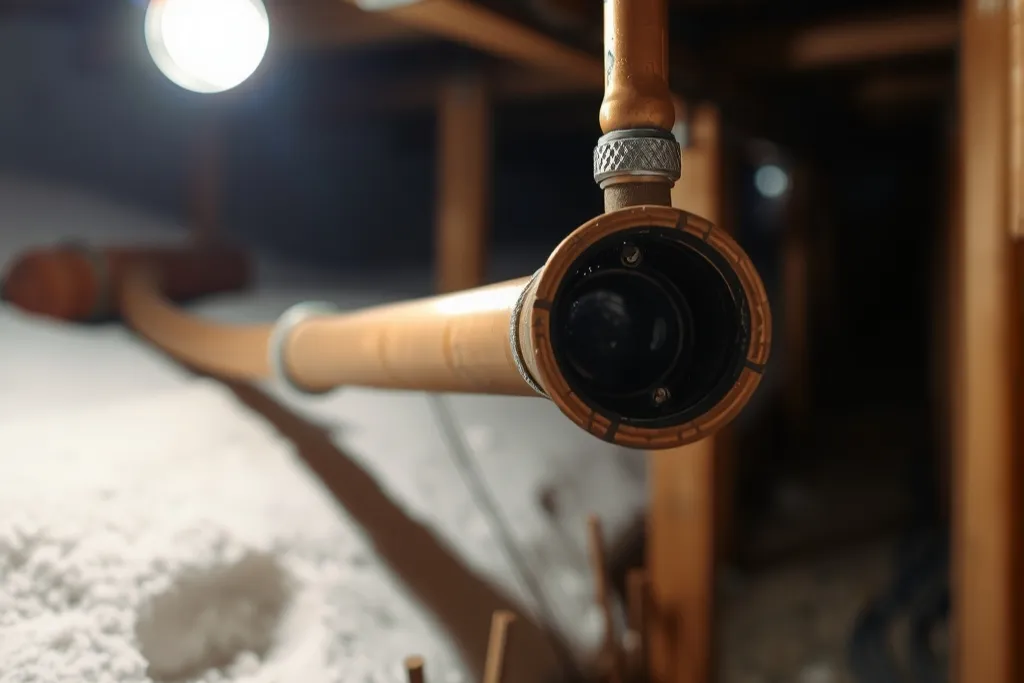
A copper supply pipe running along bare joists in a cold crawl space with frost on the insulation.
Cold walls and crawl spaces are where a winter freeze usually starts.Illustration only: a scene of the kind described on the page, generated for this site. It is not a photograph of a job a crew has done, and it shows no particular Decatur house or resident.
Job stories

Typical jobs for frozen and burst pipe damage

Typical job
Illustration: Typical: a line that split inside an outside wall in January

Typical: a line that split inside an outside wall in January

What homeowners notice
During a hard cold snap a supply line in the exterior wall of a postwar ranch house split. The thaw released water into the wall cavity, and the first sign was a soft strip of baseboard and a musty smell two days later.
What we do
The water was shut at the meter and the line isolated. The crew opened a small section of the wall where readings were highest, removed the wet insulation and the lower drywall, and placed drying equipment once the cavity was open to the air. Readings were taken at each visit in framing and subfloor until they reached target.
What to expect
The homeowner received dated photographs, a removal list and a set of readings showing the trend to target. The pipe repair was quoted separately by a plumber and the finished wall was rebuilt after the structure read dry.

three visits over about a week of drying typical visit

Options

Types and options for frozen and burst pipe damage

A split in an exposed supply line

A pipe that froze in a garage, a basement corner or a crawl space often splits where no wall is involved. The water runs across a concrete floor or into a few feet of joists, so the job is mostly extraction, a drying check and a review of the lowest finishes.

A split inside an exterior wall

A line that runs through an outside wall can freeze and split behind drywall, with no sign until a stain shows on the ceiling or the baseboard swells. The crew measures the wall base, opens a small access area and dries the cavity from inside before the finish is replaced.

A split under a bathroom or kitchen floor

When a line under a floor splits, water spreads into the subfloor and under cabinets before it shows on the surface. The crew lifts the lowest finish at the edge of the wet zone, reads the subfloor and checks the joists beneath before it sets equipment.

Still stuck? We pick up 24/7.

If it's an emergency, call now. For non-urgent frozen and burst pipe damage, send the form and we'll call you back.

Why does a frozen pipe split in the first place?

Water expands as it freezes, and a pipe that holds it in a tight space can crack or split at its weakest point, often a joint or a bend.

Ice takes up more room than the water it came from, so a line that freezes solid builds pressure against its walls. The pipe itself may hold, but a joint or a thin section can give way. The split is often found only after the thaw, when water begins to run from a spot that had been closed the whole time.

Pipes in exterior walls, unheated crawl spaces and garages are the most exposed. A line that carries warm water and freezes can split just as readily as a cold line, because the pressure builds in either case. That is why a homeowner should watch every section that runs through cold air, not only the outside faucet.

What can a homeowner do before the crew arrives?

Shut off the water at the valve, turn off power to wet areas if it can be done safely, and keep people out of standing water until a technician arrives.

If a pipe is clearly split, locate the shutoff for that line or the main valve and close it. Open the lowest faucet in the house to relieve pressure and let remaining water drain. Do not step into a flooded room or touch wiring that sits in water, and do not use a wet vacuum on a live circuit.

Photograph the damage, the water on the floor and any stains that are already showing on the ceiling. Move valuables that are not wet to a dry room. A quick note of when the water was first noticed is useful later, because it helps the crew decide how far the water may have traveled before it was stopped.

Why do burst pipes show up in ceilings and walls?

Water follows gravity and the path of least resistance, so a break upstairs or inside a wall can show up far from where it started.

A pipe that splits in a bathroom wall can send water down the cavity and out at a ceiling light, a baseboard or a window trim several feet away. The stain on the ceiling is the last place the water reached, not the place it came from, so the crew traces the path back to the source.

Insulation holds water in place, and it can keep a wall damp for days after the visible flow has stopped. The crew removes insulation that is soaked, because it does not dry in place and it keeps moisture against the framing. Where it can be saved, it is dried and checked before it goes back.

How is the rest of the plumbing checked after a burst?

The split pipe is repaired by a plumber, and the crew checks nearby runs and the water heater so the repair is not undone by a second failure.

A burst often sits near other lines that froze at the same time, and those lines can be weakened without any visible sign. The crew notes where the other runs are, which ones were exposed to cold air, and which ones showed moisture, so the plumber knows where to look first.

The water heater and its connections are also checked, since a line that froze can strain the heater's inlet. A homeowner should not restart a heater that stood in water, and the technician will explain when it is safe to bring the system back up after repairs.

Our process

How our frozen and burst pipe damage visit works

  1. Shut off the water at the break

    The first step is closing the shutoff valve that feeds the broken line, or the main valve if the local valve cannot be found. A technician shows the homeowner where the shutoff is and how to use it, because a line that keeps running adds water to every wet area while the crew works.

  2. Remove standing water and check the power

    Water that reached floors is pumped or vacuumed out, and power to wet rooms is confirmed off before anyone steps in. A pipe that split inside a wall can keep feeding water into the cavity after the visible flow has stopped, so the crew checks the lowest point of the room again later.

  3. Open the wall only where readings call for it

    A split inside a wall is found with a meter and the pattern of the stain rather than by guessing. The crew opens the smallest area that gives access to the damaged pipe and the wet framing, and it photographs the cavity before anything is repaired or closed.

  4. Dry the framing and subfloor

    Air movers and dehumidifiers run until the framing, subfloor and drywall reach their dry targets. Ice that formed in a pipe does not leave water in the same place it froze, so the crew checks the whole run of the line, not only the spot that failed.

  5. Hand over the plumbing record

    The final visit includes a note of where the pipe split, which section was replaced or sealed, and the readings that show the structure has dried. A licensed plumber is the right person to repair the line itself, and the record helps that work start with the facts.

Macon County

Why frozen and burst pipe damage is different in Central Illinois

Decatur gets real winter cold, and the December 2022 cold snap showed how quickly a town's pipes can fail when temperatures fall and stay low. A crew working here expects a cluster of calls on the coldest nights, and it plans its equipment for that rather than waiting for the phones to ring.

Many older houses in town have supply lines that run through exterior walls and unheated spaces that were not designed for modern insulation. A technician asks where the line runs before opening a wall, because the most likely place for a split is the stretch of pipe closest to the outside air.

Across Macon County, villages and rural homes often have longer supply runs and more exposed crawl spaces than houses inside the city. A crew working outside Decatur plans the shutoff and the access route first, since a long run can be difficult to isolate without a clear map of the valves.

Related

Water Main Break Water Damage

A break in a street main can send water into a home through the service line, the foundation or a low door, and the cleanup starts once the water is stopped.

Water Heater Leak Damage

A leaking water heater can soak a closet, a utility room or a finished floor, and the cleanup has to start with the heater's base and the water line on the wall.

Emergency Water Extraction

Standing water is pumped out of floors, carpet and crawl spaces, the room is made safe to enter, and drying starts without a gap.

Ceiling and Drywall Water Damage

A stain on a ceiling or a bulge in the wallboard usually means water has been sitting in the cavity above, so the board is opened, dried and checked before it is closed.

Guides

Read before you book

FAQ

Frozen and Burst Pipe Damage FAQs

Can I thaw a frozen pipe myself?

A homeowner can warm an exposed section with a hair dryer or warm towels, but an open flame, a torch or a heater placed against the pipe is a fire risk. If the pipe has already split, thawing is not the step to take. Shut off the water and call a plumber.

Why is the water still coming in after I closed the valve?

Water that has already entered a wall or ceiling keeps draining down and out for a while. The crew checks the lowest point of the room again later and reads the cavity to confirm that no water is still moving.

How do you find a burst pipe inside a wall?

A technician uses the pattern of the stain, a moisture meter and the sound of running water in the wall when fixtures are closed. The crew opens the smallest area that gives access, so the damage is confirmed without tearing out more than necessary.

What temperature keeps pipes from freezing?

The city advised keeping the thermostat no lower than 55 degrees Fahrenheit during a cold snap and letting exposed faucets trickle. Those steps help most in areas where pipes run through unheated spaces.

Will the carpet and subfloor be saved?

Carpet and pad that soaked are usually removed. Subfloor that dries to target is kept, while subfloor that has swelled, softened or delaminated is replaced. The readings decide, and the crew explains each decision on the visit.

WhatsApp